Every lithium-ion power tool battery is built around cylindrical cells — and today almost every pack you will encounter uses one of two formats: 18650 or 21700. The numbers are just dimensions (18mm × 65mm and 21mm × 70mm), but the difference between them shapes capacity, runtime, weight, cost, and even the tool's balance.
For B2B buyers, understanding this one choice makes it much easier to compare quotes, judge whether a listed capacity is realistic, and decide between a catalog replacement and a custom pack. Here is what the two formats mean in practice.
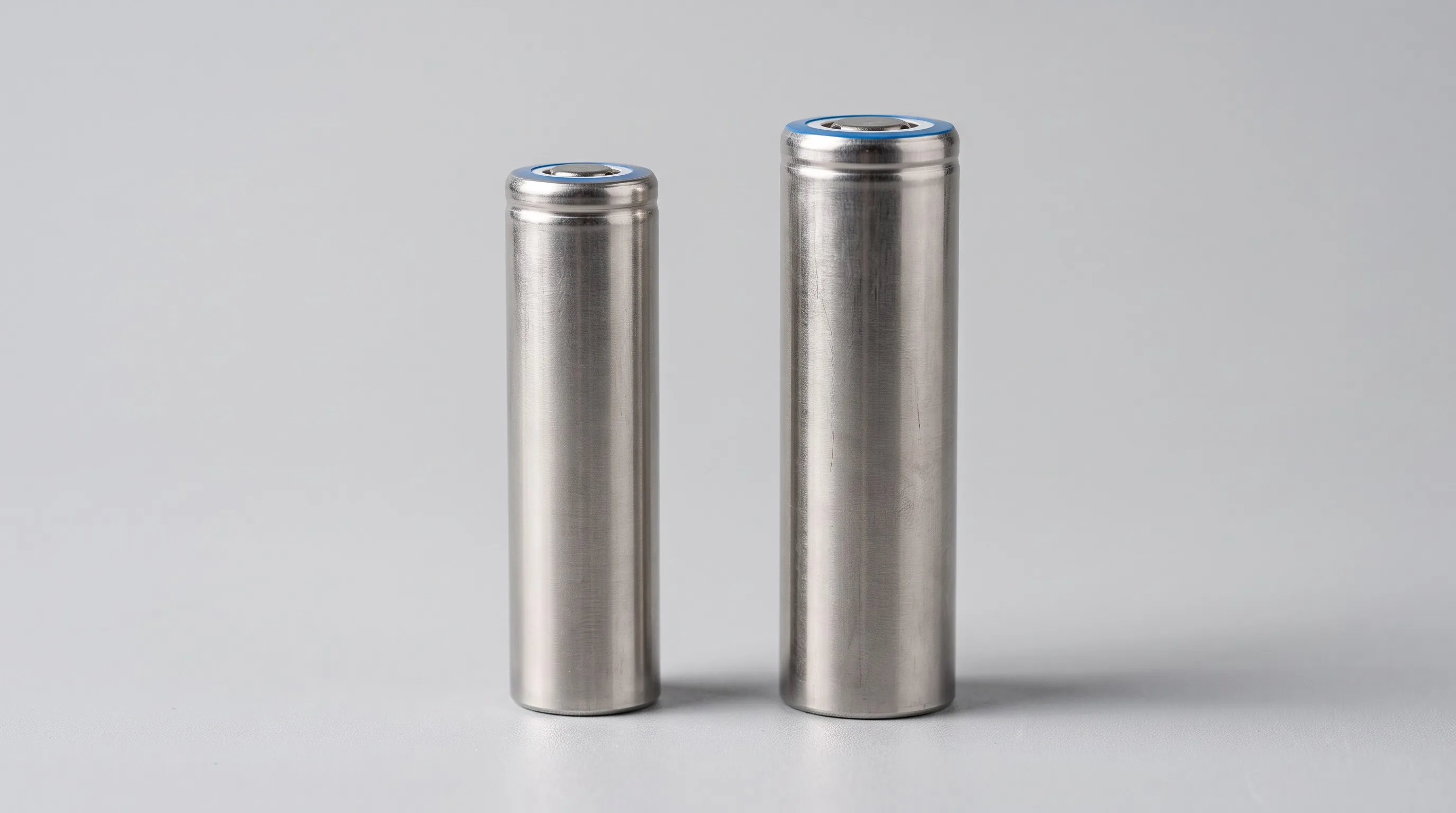
18650: The Proven Workhorse
The 18650 has powered laptops, power tools, and electric vehicles for two decades. It is the most mature and most widely produced lithium cell format in the world.
- Capacity: typically 1500–3500mAh per cell, depending on grade.
- Advantages: lowest cost per cell, enormous supply, mature manufacturing, and well-established quality-control data.
- Trade-off: smaller format means more cells (and more weld points) to reach a target capacity.
21700: More Energy Per Cell
The 21700 was developed for electric vehicles and has rapidly moved into premium power tool packs. Its larger volume delivers more energy per cell and better thermal behavior under sustained load.
- Capacity: typically 4000–5000mAh per cell — roughly 50% more than a typical 18650.
- Advantages: higher capacity with fewer cells, reduced internal resistance, better performance in high-drain tools like grinders and circular saws.
- Trade-off: higher cost per cell and slightly larger pack dimensions.
The Key Differences at a Glance
| Characteristic | 18650 | 21700 |
|---|---|---|
| Dimensions | 18mm × 65mm | 21mm × 70mm |
| Typical capacity | 1500–3500mAh | 4000–5000mAh |
| Energy per cell | Lower | Higher |
| Discharge performance | Proven, adequate | Better at high current |
| Cost per cell | Lower | Higher |
| Supply maturity | Very high | High and growing |
| Typical use in tools | Budget to mid-range packs | High-capacity, high-power packs |
Why the Format Determines Capacity
A pack's rated capacity is the sum of its cells. Take the common 20V Max platform, which uses a 5-series (5S) configuration:
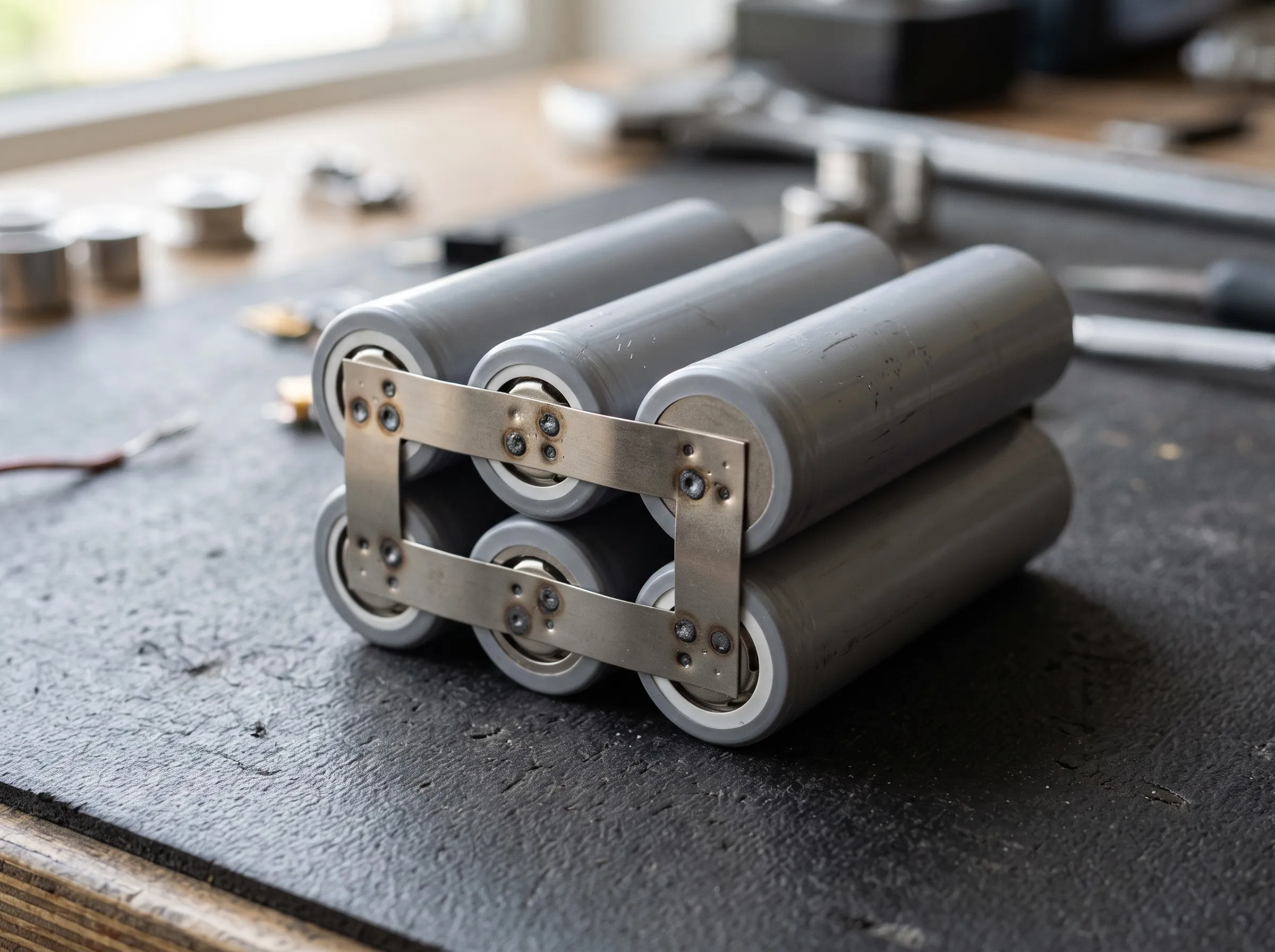
- A 5S2P pack built with 2500mAh 18650 cells = 5.0Ah (10 cells).
- A 5S1P pack built with 5000mAh 21700 cells = 5.0Ah (5 cells).
Same capacity, half the cells, fewer weld joints — which is why 21700 packs can be lighter and more reliable at equal capacity, and why premium brands increasingly advertise 5.0Ah, 6.0Ah, and 8.0Ah packs built on 21700 cells.
Which Format Is Better for Your Products?
There is no universal winner — it depends on the tool, the target price point, and the required runtime:
- 12V and light-duty tools: 18650 remains the sensible default — cost-efficient and fully proven.
- 18V/20V high-capacity packs (4.0Ah and above): 21700 increasingly makes sense for runtime, weight, and sustained discharge.
- High-drain tools (circular saws, grinders, impact drivers): 21700's lower internal resistance handles voltage sag better under load.
- Budget lines: 18650 keeps the bill of materials down and pricing competitive.
Format Matters Less Than Quality
Here is the part many buyers skip: a premium 18650 pack can outperform a poor-quality 21700 pack. Cell grade, brand, and the BMS matter more than the format number:
- Cell grade. Grade-A cells from established manufacturers deliver consistent capacity and lifespan. Unknown or recycled cells are the main cause of "cheap" batteries that die quickly or swell.
- Discharge rating. A cell rated for high continuous discharge is required for high-drain tools. Ask for the discharge specification, not just capacity.
- Welding and assembly. Nickel-strip spot welding and a proper BMS determine reliability under vibration and heat.
- Matching. Cells in one pack must be matched by capacity and internal resistance, or the pack ages unevenly.
What to Ask Your Supplier
When comparing quotes for replacement or custom packs, ask these four questions:
- Which cell format does the pack use — 18650 or 21700?
- What cell brand and grade, and what is the continuous discharge rating?
- How many cells in series and parallel (e.g., 5S1P or 5S2P)?
- Does the pack include a BMS, and what protections does it cover?
These answers tell you whether the quoted capacity is realistic and whether the pack fits your application — long before samples ship.
18650, 21700, or Custom Configuration?
Catalog replacement batteries are typically offered in the cell configuration that best matches the original pack. If your product needs a specific capacity, discharge profile, or enclosure — or you want to specify cell brand and grade — a custom OEM/ODM battery project lets you define the cell solution from the start. The same compatibility rules apply: voltage platform, interface, charger, and tool model must be confirmed before production.
Ready to Compare Packs with Confidence?
Browse the replacement battery catalog by platform, or send your target tool model, voltage, and capacity requirements to GeB Power for a cell-level review and quotation.


评论
发表评论